
As I come to the end of my time with Derbyshire County Council, I’ve found myself pausing. Not just because the work is done – but because it matters. The classrooms, corridors, car park conversations, filing cabinets, biscuits on desks. They all mattered. And I suppose this post is a way of saying thank you – to the children, the colleagues, and the unexpected turns that shaped the past 25 years.
What follows isn’t a career history. It’s a reflection. A series of chapters – each with a moment, a message, and a gentle invitation to you, dear reader, to think about your own journey.
Chapter One: The Early Days (1999–2000s)

I joined Derbyshire County Council in November 1999 as a recently qualified teacher, working in a junior school in one of the more deprived parts of the county. I still remember the smell of the school hall varnish, the chunky BBC computers (already outdated!), and the ceiling in my classroom that would drip when it rained. But mostly, I remember the joy.
Quite early on, I took over the Year 3 class – and to this day, it’s probably still my favourite year group. That age is magic. They’re full of character, curiosity, and chaos in equal measure. A couple of years in, I had a class of 38 (yes, really), in a mixed Year 3/4 setup. Many of the children were working below expected levels – some with statements of SEN, which pre-dated EHCPs – and there was very little additional adult support. If you had a TA once or twice a week, you counted yourself lucky.
We didn’t have breakfast clubs back then. And while I think I was a bit oblivious to the depth of deprivation in those early days, I picked up on things quickly. I’d stock up on digestive biscuits and, every morning, I’d lay out a paper towel on each desk with a biscuit waiting for the children when they arrived. Their books would be open and pencils already sharpened — no time lost to faffing about with the sharpener. There was always a task ready on the whiteboard. I still expected learning, but I wanted them to start their day with something small and comforting. Something that said, “I’ve thought about you.”
Looking back now, I realise that what I was building, even then, was relationship. I didn’t have a strategy, or a policy. I had instinct. And it told me that children thrive when they feel seen and held.
I had wonderful colleagues in that school. One, in particular, a dear friend to this day, had a child in his class who was part of a blended family with a child in mine. The family was in crisis, and it was nearing Christmas. One evening, he and I stopped off at a supermarket and bought the children some shoes, and a few little gifts, just so they had something under the tree. We didn’t think of it as extraordinary at the time. It was just something you did. But I think now, maybe that’s what care looks like, in its quietest form.
What I learned:
That when you truly see children – not just their data, but their spark – they respond. And that inclusion starts long before any plan is written. It starts with a biscuit. A sharpened pencil. A moment of humanity.
Reflection prompt for the reader:
What do you remember about your first few weeks, months, years in education? What stayed with you?
Chapter Two: Becoming a SENDCo

By the time I became the SENDCo, I’d been teaching at my junior school in Derbyshire for a few years. SEND hadn’t really been a noticeable part of school life – not in the way it is now – and it certainly wasn’t something I’d been trained in. Then one day, the SENDCo at the time had a riding accident and was off for the foreseeable.
I don’t remember volunteering. I just remember the headteacher telling me, “You’ll do it.” And so I did.
What greeted me was a filing cabinet; one of those heavy ones that you have to yank open, stuffed with paperwork in total disarray. No offence to my predecessor (well, maybe a little), but it was chaos. In trying to organise it, I began to piece together the role: what documents were important, which plans needed updating, what actually mattered. It was all paper back then, plans, statements, communication, and there was no roadmap. Just me and the filing cabinet.
But I learned. Quickly. On the job. And over time, I became really proficient; in the systems, yes, but also in the subtleties.
I didn’t always get it right. I remember one parent coming in upset because her SEND child had been let out at the end of the day before she was ready at the gate. The school was perfectly safe, but she was right – I could have waited. That moment gave me a valuable insight into parent advocacy. Not blame, but advocacy, that protective love and accountability parents bring.
There were also beautiful successes. I began to embrace child-centred reviews long before they were expected. I took pride in getting my paperwork written up quickly and well, often within the hour, sent off in a big orange area mail wallet, no less. I still joke that I love paperwork. Maybe it started there.
And I remember one child in particular. His mum was seemingly on her own, and the journey to diagnosis (eventually autism) wasn’t straightforward. I walked every step of that journey with her: school meetings, referrals, even the paediatric appointment where he was finally diagnosed. I waited with her outside, and I remember her crying with relief when she came out. We’re still connected to this day. That boy is now a young man. And seeing who he’s become? That’s everything.
What I learned:
That being a SENDCo isn’t just about systems – it’s about stories. You hold space for families during some of their hardest chapters. And if you do it well, you don’t just build plans. You build trust.
Reflection prompt for the reader:
What’s one thing you now do instinctively that once felt new or scary?
Chapter Three: Moving to SSSEN
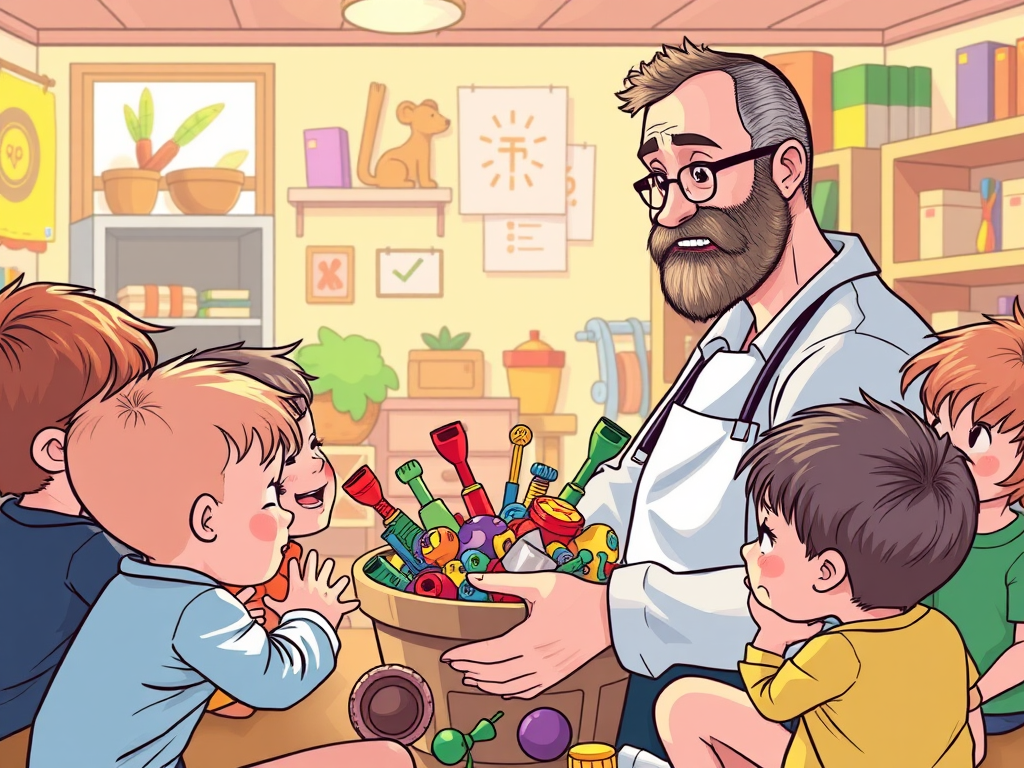
Quite late into my time at the junior school, a new headteacher arrived; and in hindsight, she was pivotal. At the time, I found her a little intimidating. But now I see that she was someone who simply demanded the best. One of her expectations for me was to gain the formal postgraduate SENDCo qualification – and I did.
Juggling a full teaching load while completing the qualification was intense, but it changed me. It helped me reflect more deeply on the systems I’d built in school, and pushed me to develop stronger parent and pupil voice. By the end of the course, our provision was solid. I was proud of what we’d created.
So when a job came up in the Support Service for Special Educational Needs (SSSEN), I felt I had both the experience and the qualification to apply. I got the job. I was bowled over. Sixteen years in the same school – it wasn’t easy to leave. But it was time. And it was the right step.
Joining SSSEN was like stepping into a whole new world. I moved from being a generalist advocate for SEND to becoming a specialist – building up expertise across the four broad areas of need. I learned about strategies, conditions, approaches I’d never encountered before. It was expansive and exciting.
My first case? A complex little girl in nursery. And there I was, a seasoned junior teacher, suddenly in a setting where play was the language of learning and the needs were profound. It was a steep learning curve, but it taught me to think creatively, act early, and keep asking, “What could we try now?”
By the end of my time in SSSEN, I felt confident working with a wide range of children. I was especially proud of my work with children with profound and multiple learning difficulties. In one school, I supported a small group of children and their TAs for a full day and a half each week. We tried things. We reflected. We collaborated with teachers, too, holding them accountable in the most supportive way.
How do you teach a child with no verbal speech and minimal physical control about the Vikings? That was one of many questions. And we found ways. We didn’t dumb it down. We adapted, we scaffolded, we listened to what the child could show us.
I also developed a much deeper understanding of assessment. I came to see that progress isn’t always academic – sometimes it’s in a glance, a pause, a moment of self-regulation. Observation became a core part of my practice.
And I know I made a difference. The feedback from schools was overwhelmingly positive. I was observed, praised, invited back. And most importantly, I supported staff who were doing their best and just needed someone to believe in them a bit.
What I learned:
That inclusion deepens with expertise. That adapting doesn’t mean lowering the bar; it means changing the route. That noticing, truly noticing, is one of our most powerful tools.
Reflection prompt for the reader:
When have you quietly changed something for the better?
Chapter Four: Inclusion Support Advisory Teacher

This past year, I’ve taken on the role of Inclusion Support Advisory Teacher – and it’s been quite the eye-opener. I’d already begun to work more strategically in my final years with SSSEN, but this role felt like a natural progression. It took everything I’d learned and asked me to zoom out: to think not just about pupils, but about systems. Not just about needs, but about culture.
It was daunting at times. There were moments I felt out of my depth — navigating frameworks, border complications between local authorities, legal responsibilities that no one had fully explained. But it’s also been deeply rewarding. Because I’ve had the chance to work shoulder to shoulder with SENDCos and headteachers, supporting them to reflect on and strengthen their inclusive practice.
Sometimes it was a gentle nudge. Sometimes it was a firmer challenge. But always with a mindset of: what’s working, even in this climate of no extra time and no extra funding — and how can we build on that?
My work has ranged widely, from exploring emotionally-based school avoidance (EBSA), trauma, and attendance barriers, to running staff training, facilitating workshops, and holding one-to-one reflective conversations. I’ve worked with primary and secondary schools, helping them interrogate their assumptions, refine their strategies, and rethink the way they support neurodivergent pupils.
I’ve found myself returning often to this question:
How can we move forward without adding to workload or needing extra funding?
Because that’s the reality schools are living in. And if inclusion is going to be meaningful and sustainable, it has to work within those parameters.
This role has also reconnected me with my roots in autism practice. Even as an Autism Education Trust trainer in my previous role, I’ve come to understand more deeply how the application of that training varies widely – and how critical it is to embed mindset shifts alongside practical strategies. It’s about enabling environments, not fixing children.
And it’s about people. Always. I’ve come to understand the value of supporting not just children, but the adults around them. Teachers who feel held are far more able to hold space for their pupils. Inclusion, I’ve learned, is a whole-school emotion.
What I learned:
That inclusion at a strategic level is messy, complex, and deeply human. It’s about frameworks, yes – but it’s also about courage, compassion, and commitment. It’s about asking better questions. And listening to the answers.
Reflection prompt for the reader:
What does inclusion look like in your setting, not in theory, but in the day-to-day details?
A Closing Reflection

So here I am, looking back, not with regret or fanfare, but with quiet pride. I’ve learned that inclusion isn’t a job or a target. It’s a way of being. A way of noticing, listening, adapting, and holding people – children, staff, families – with care.
If you’re in education, and you’re tired, I understand. If you’re wondering whether you’re making a difference, you are. You really are.
“Leave a trail of light behind you
Everywhere you go.
Whose darkness you’ll illuminate
You may never know.” (L.R. Knost)
Thank you, Derbyshire. And thank you to all those who walked alongside me – for a term, a year, a career.
With warmth and hope
Lee
 That SEND Teacher