

A couple of weeks ago, I was meeting with a headteacher who’s launching a project across his cluster of schools to explore how continuous provision might be extended into Year 1—and potentially beyond. Midway through our conversation, a memory sparked. “I’ve done something on this before,” I told him, “let me dig it out.”
A day later, I sent him a document I’d created a year or two ago when working with another school facing that familiar challenge: how to support the transition from Reception to Year 1 when the leap into table-based learning feels too big, too sudden, too rigid.
His response? “Yes please.”
And so, this piece resurfaces. Still useful. Still timely. Still asking the same important question:
What if continuous provision didn’t stop at the Reception door?
Reclaiming the Environment as The Other Teacher
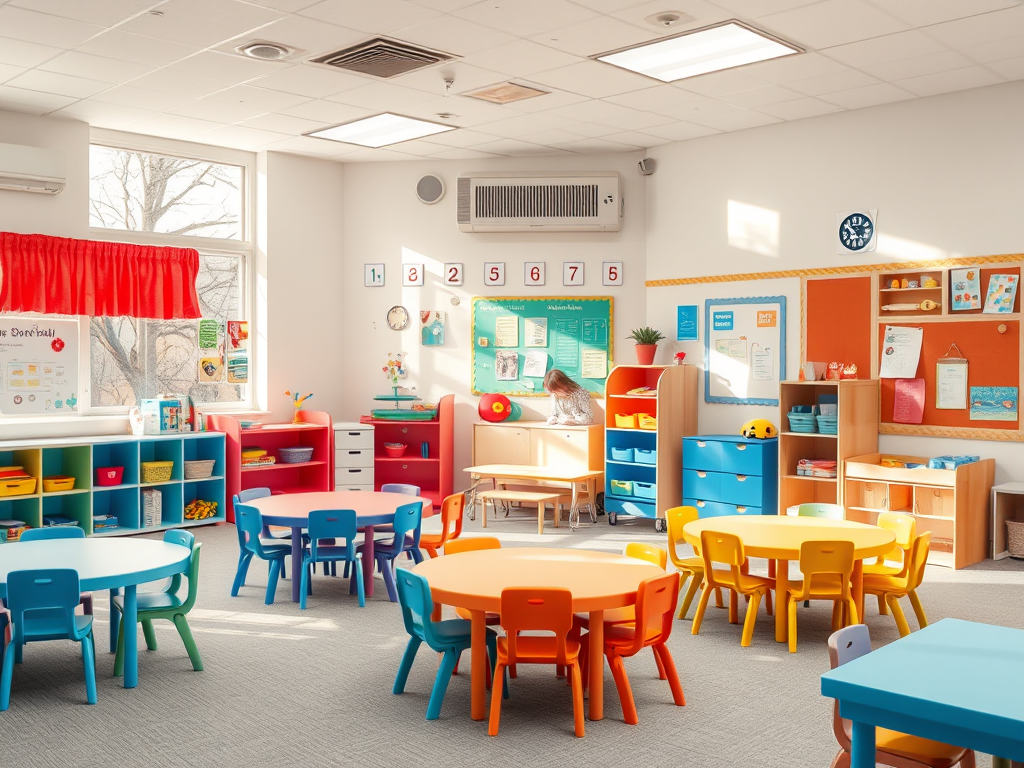
In Early Years classrooms, the learning environment is often thought of as the other teacher—a co-facilitator, a silent guide, an invitation to explore and discover. But once children reach Year 1, we tend to change tack. Less so of the role-play corners and open-ended invitations. In come whiteboards, pencil grips, and carpet sessions.
What if we didn’t have to choose?
Continuous provision, when thoughtfully designed and rooted in curriculum objectives, allows children to access learning independently, with depth and creativity. It isn’t just ‘play’—it’s provision. It teaches. And when it’s embedded well, it becomes an essential part of classroom practice, not an add-on.
A Framework You Already Have
When I developed the resource below, I used the Year 1 National Curriculum as my framework—breaking it down subject by subject and objective by objective, and then exploring how children might meet each one through independent, creative play.
For teachers in older year groups who are curious about continuous provision but unsure where to begin, this might be the key: you already have the framework. It’s the National Curriculum. The challenge is not in creating new content—but in re-imagining how that content can be accessed. How might a child explore this skill through play? Through collaboration? Through purposeful independence?
Ideas for Extending Continuous Provision into Year 1
Using the National Curriculum as a Framework for Independent Learning
| Mathematics | |
| Numbers and the Number System | |
| 1.1 Count to and across 100: | Number Line Adventure – Create a paper or cardboard number line with large numbers. Provide a small toy or figurine for each child. Children move their toy along the number line, counting as they go. This can be done independently, and they can choose their favourite toys for the adventure. |
| Number Hunt Cards – Prepare cards with pictures of objects and corresponding numbers. Children independently search for objects in the classroom or play area and match them to the numbers on their cards, reinforcing counting skills. | |
| 1.3 Given a number, identify one more and one less: | Number Tower Match – Provide building blocks with numbers on them. Children independently match blocks with numbers one more or one less than a given number. They can then build a tower using the matched blocks. |
| Number Path – Create a path with numbered stepping-stones on the floor. Children follow the path, hopping from one stone to another while identifying numbers one more or one less than the current stone. | |
| Calculation – Addition and Subtraction | |
| 1.2 Represent and use number bonds within 20: | Number Bond Stamping – Provide stampers with numbers and pictures representing objects. Children independently create number bonds by stamping the corresponding numbers and pictures on paper. |
| Puzzle Pairs – Create puzzle pieces with numbers that form number bonds. Children independently match the puzzle pieces to create complete number bonds. | |
| 1.4 Solve one-step problems involving addition and subtraction: | Story Problem Cards – Create simple story problem cards with pictures. Children independently choose a card, solve the problem using counters or drawings, and check their answers using the pictures. |
| Equation Tiles – Provide tiles with numbers and symbols. Children independently create addition and subtraction equations using the tiles, using pictures or objects for representation. | |
| Calculation – Multiplication and Division | |
| 1.1 Solve one-step problems involving multiplication and division: | Array Artwork – Give each child a small canvas or paper. Provide materials for creating visual arrays. Children independently create artwork by arranging objects in arrays, reinforcing the concept of multiplication. |
| Division Drawings – Provide drawing materials and cards with simple division problems. Children independently draw pictures representing the division problems and share their solutions. | |
| Measures | |
| 1.1 Compare, describe, and solve practical problems: | Measurement Exploration Cards – Prepare cards with pictures of objects for each measurement type (length, weight, capacity, time). Children independently explore the classroom, finding objects and matching them to the appropriate measurement category on their cards. |
| Coin Counting Mat – Create mats with pictures of coins. Children independently count and match plastic or cardboard coins to the pictures on the mats, reinforcing recognition and value. | |
| 1.6 Tell the time to the hour and half past the hour: | Clock Craft – Provide pre-cut clock faces and hour/minute hands. Children independently assemble their clocks, draw the hands to represent specific times, and practice telling time |
| Time Puzzle – Create time puzzle pieces with clock faces and digital times. Children independently match the puzzle pieces to create pairs of matching times. | |
| Shape and Space | |
| 1.1 Recognise and name common 2-D and 3-D shapes: | Shape Sorting – Provide bins or boxes labelled with shape names. Children independently sort small objects (cut-outs, small toys) into the corresponding shape containers. |
| Shape Dot-to-Dot – Create dot-to-dot worksheets with shapes. Children independently connect the dots to reveal the shape and then colour it in. | |
| 1.2 Describe position, directions, and movements: | Positional Play Mat – Create a play mat with labelled positions (e.g., in, on, under). Children independently place toys or objects in the correct positions on the mat. |
| Shape Hunt Bingo – Prepare Bingo cards with positional words (e.g., next to, behind, between) and shape pictures. Children independently find and mark the corresponding positions on their Bingo cards as they discover shapes in the room. | |
| Reading | |
| Word Reading | |
| 1.1 Apply phonic knowledge and skills as the route to decode words: | Phonics Bingo – Create bingo cards with words that include phonemes taught in class. Children independently read the words when called out by the teacher and cover the corresponding words on their bingo cards. |
| Phoneme Hunt – Provide books or texts with specific phonemes highlighted. Children independently hunt for words containing the targeted phonemes, practicing decoding skills. | |
| 1.3 Read accurately by blending sounds in unfamiliar words: | Word Building Station – Set up a station with cards featuring unfamiliar words and corresponding pictures. Children independently blend the sounds to pronounce the unfamiliar words and match them to the correct pictures. |
| Nonsense Word Puzzles – Create puzzles with pictures and corresponding pieces with nonsense words. Children independently assemble the puzzles by matching the correct words to the pictures. | |
| 1.4 Read common exception words: | Exception Word Memory – Create pairs of cards with common exception words. Children independently play a memory game, matching cards with the same words. This reinforces recognition of common exception words. |
| Exception Word Scavenger Hunt – Hide cards with common exception words around the room. Children independently search for and collect the cards, reading the words aloud as they find them. | |
| 1.5 Read words containing taught grapheme-phoneme correspondences and endings: | Word Endings Sorting – Provide cards with base words and cards with different endings (-s, -es, -ing, -ed, -er, -est). Children independently match the correct ending cards to the base words, reinforcing understanding of grapheme-phoneme correspondences. |
| Reading Sentences with Endings – Create sentences with words containing various endings. Children independently read the sentences, emphasizing the correct pronunciation of words with different endings. | |
| Reading Comprehension | |
| 1.1 Listen to and discuss a wide range of poems, stories, and non-fiction: | Reading Corner Book Talks – Set up a cosy reading corner with a selection of books. Children independently choose a book, read it silently, and then discuss their book with a friend or in a group, sharing what they liked about the story. |
| Author’s Chair – Designate a special chair as the “Author’s Chair.” Children independently select a book they enjoyed, sit in the chair, and share why they liked the book with the class. | |
| 1.3 Become very familiar with key stories, fairy stories, and traditional tales: | Story Elements Sorting – Provide cards with story elements (characters, settings, events). Children independently read or listen to a story and sort the cards based on the elements they identify in the story. |
| Story Retelling Station – Set up a station with picture cards representing key events in a story. Children independently use the cards to retell the story, reinforcing comprehension and sequencing skills. | |
| 1.4 Recognize and join in with predictable phrases: | Predictable Phrase Flip Chart – Create a flip chart with common phrases or sentences from a familiar book. Children independently flip through the chart, reading and joining in with the predictable phrases. |
| Sentence Strip Predictions – Provide sentence strips with missing predictable phrases. Children independently predict and fill in the missing phrases, reinforcing their ability to anticipate and join in while reading. | |
| 1.7 Explain clearly their understanding of what is read to them: | Book Review Station – Set up a station with book review templates. After reading independently, children fill out a book review, explaining what they liked, disliked, and what they learned from the book. |
| Reading Response Journals – Provide journals where children independently write or draw their responses to what they read. This could include their favourite part, connections to their own experiences, or questions they have about the text. | |
| Writing | |
| Writing – Transcription Spelling | |
| 1.1 Spell words containing each of the 40+ phonemes taught: | Phonics Word Hunt – Place cards around the classroom or outdoor area with pictures and words containing different phonemes. Children independently go on a word hunt, matching the words to the corresponding pictures and saying the sounds aloud. |
| Phoneme Sorting Mats – Provide mats labelled with different phonemes. Children independently sort small objects or cards with words based on their phonemic components onto the corresponding mats. | |
| 1.2 Name the letters of the alphabet: | Alphabet Letter Sorting – Set up a station with objects or pictures representing each letter of the alphabet. Children independently sort the objects/pictures into letter categories, reinforcing letter recognition. |
| Alphabet Writing Cards – Provide cards with letters of the alphabet. Children independently practice writing the letters and matching them to objects or pictures that begin with the corresponding letter sound. | |
| 1.3 Add prefixes and suffixes: | Prefix and Suffix Puzzles – Create puzzles with root words and separate pieces for prefixes and suffixes. Children independently match the pieces to form complete words, focusing on the correct use of prefixes and suffixes. |
| Plural Marker Sorting – Provide cards with singular nouns. Children independently add -s or -es to form plurals, sorting the cards based on the correct plural marker. | |
| 1.5 Write from memory simple sentences dictated by the teacher: | Sentence Building Station – Set up a station with sentence cards and word cards. Children independently select word cards to construct sentences dictated by the teacher, practicing spelling and word recall. |
| Dictation Drawing – Dictate simple sentences to the children. After writing the sentences, they independently illustrate the sentences to reinforce understanding and memory. | |
| Handwriting | |
| Writing – 1.1 Sit correctly at a table, holding a pencil comfortably and correctly: | Pencil Grip Practice – Provide various writing tools and worksheets with different shapes. Children independently practice holding pencils correctly, drawing lines, circles, and shapes to strengthen their grip. |
| Seating Spot Check – Create designated “seating spots” with visual cues for correct posture. Children independently choose and sit in their spots, ensuring they are sitting correctly before beginning writing activities. | |
| 1.2 Begin to form lower-case letters in the correct direction: | Lowercase Letter Playdough Mats – Provide playdough and mats with lowercase letters. Children independently roll playdough to form the letters, reinforcing correct letter formation. |
| Letter Tracing Cards – Prepare cards with dotted letters. Children independently use their fingers or pencils to trace the letters on the cards, practicing the correct direction. | |
| Writing – Composition | |
| 1.1 Write sentences by saying out loud what they are going to write about: | Sentence Starters Jar – Fill a jar with sentence starters or story prompts. Children independently choose a card, say aloud what they will write about, and then write sentences based on their chosen prompts. |
| Picture Sequencing Stories – Provide picture cards that tell a story when arranged in order. Children independently select cards and use them to compose sentences, focusing on sequencing and narrating their own stories. | |
| 1.2 Discuss what they have written with the teacher or other pupils: | Writing Reflection Journals – Give each child a writing reflection journal. After completing a writing task independently, they draw a picture or write a reflection about what they enjoyed or found challenging. Teachers can later discuss these reflections with individuals or groups. |
| Peer Feedback Pairs – Pair children up and have them share their written work with a peer. They discuss what they liked about each other’s writing and offer constructive feedback independently. | |
| Writing – Vocabulary, Grammar & Punctuation | |
| 1.1 Develop their understanding of the concepts set out in English Appendix 2: | Sentence Punctuation Sort – Provide cards with sentences missing punctuation. Children independently add the correct punctuation (capital letter, full stop, question mark, exclamation mark) to the sentences and then sort them based on punctuation type. |
| Sentence Building with ‘And’ – Set up a station with word cards. Children independently create sentences using the word ‘and’ to join clauses, practicing the concept of joining words and clauses. | |
| 1.2 Use the grammatical terminology in English Appendix 2: | Grammar Terminology Match – Create cards with grammatical terms and their definitions. Children independently match the terms to their correct definitions, reinforcing the use of grammatical terminology. |
| Grammar Discussion Station – Set up a station with sentence cards. Children independently read the sentences and discuss the grammar concepts used, using the terminology from English Appendix 2. | |
An Invitation

Continuous provision isn’t just about letting children ‘play.’ It’s about offering purposeful, scaffolded, curriculum-linked opportunities to explore concepts independently. It’s about ensuring that the classroom environment keeps doing the heavy lifting even when an adult can’t be everywhere at once.
And perhaps most importantly, it’s about recognising that many of our learners—particularly those with SEND, those with anxiety, those whose developmental stages haven’t caught up with the calendar—still need this approach.
So the invitation is this:
- Can we extend the thinking behind continuous provision into Year 2, Year 3 and beyond?
- Can we stop viewing adult-led instruction as the only legitimate way to meet curriculum goals?
- And can we start to see our classrooms themselves as skilled co-educators, shaping and supporting learning through the choices we make about space, time and resources?
I’d love to hear what you’re trying in your own setting!
 That SEND Teacher