
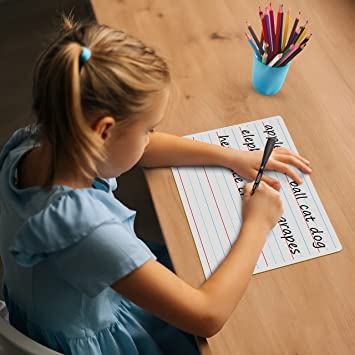
I love my job. I get to visit lots of schools and meet many wonderful people. It can be quite intimidating though, being the ‘expert’ – hello imposter syndrome! Indeed, I often learn just as much from my schools as they do from me! Today’s approach is something I witnessed in one school, something that is so simple, I kick myself that I didn’t think of it myself years ago!
Using Teaching Assistants better

TAs are hard-working members of the school community. They are amazing! However, often they are the de facto teachers of many SEND children. Despite their best efforts, this can create issues. For example, they can feel pressure to overly help SEND children through ‘task completion’; an urge to get a job done rather than focus on the process itself. Over time, these develop learned helplessness in SEND children, who become reliant on TAs to essentially do the work for them, while children copy the end result. The Education Endowment Foundation recognises this, and more information can be found here: https://educationendowmentfoundation.org.uk/education-evidence/guidance-reports/teaching-assistants
If I think back to the early 2000s, at a time when we had the Literacy Hour, I remember ‘Shared Writing’ sessions. The idea is that groups of children would contribute to a shared text. This approach is great in principle but is easily corrupted. What could easily happen, and indeed still does, is that children would tell the adult what they wanted to write, and the adult would write this on a whiteboard, adapting along the way, potentially without child input or explanation. Then this would be copied into a book. I’ve been guilty of this myself.
I must stress that this is not the fault of TAs. As I say, they are amazing, and woefully underpaid and appreciated! Instead, it is up to teachers to determine how SEND children are taught and collaborate with TAs to implement the work. And I get it, teachers too are under enormous pressure to get stuff down in books, show evidence, and so on. However, this pressure can mean that the very point of learning is lost. As Marcus Aurelius said:
“If you seek tranquillity, do less. Or (more accurately) do what’s essential. Do less, better.”
Quality, not quantity
This brings me to writing. Writing is hard! It can be very hard for SEND children, for many reasons. But that shouldn’t be a reason to do it for them, otherwise they will never learn to do it for themselves. SEND children might not be able to produce a page of writing, but is the point of writing the quantity, or the quality? Indeed, for all children, we’d agree that quality is what’s important.
So, bearing this in mind, let me describe slow writing. It’s so simple!
Slow writing – the process
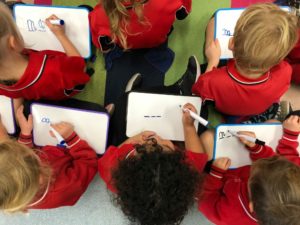
The child creates a sentence, which they then write on a whiteboard. This is then checked, either by a peer or an adult. The amount of support they receive for each sentence can be decided. For instance, corrections or improvements can be made, or they could be suggested for the child to carry out themselves. Hello editing! How they go about making these corrections or improvements can also be adapted depending on need and ability. So, if the child is adept with an iPad, they can use this to ask for spellings, synonyms, etc., or they can refer to a word bank, working wall, and so on. Alternatively, they could simply ask a friend or adult. Once the sentence is ready, then it can be written in a book.
This process provides so many opportunities to learn. It develops independence, as the child has a go themselves. They develop speed and fluency. They learn to edit and problem solve, seeking answers using technology, dictionaries, or the environment. They develop self-confidence and social skills as they interact with peers to improve their work, becoming braver in seeking assistance when necessary.

Yes, this approach will be slow, but the clue is in the name! And the results may be clunky at first. But think of all that is going on behind the scenes. Every journey begins with a first step. Over time, writing will be so much better, and more to the point, the child is the driving force, not an adult.
What I particularly like about slow writing is that it doesn’t need any special equipment. It’s not an intervention that needs hundreds of pounds to get going. A whiteboard and a pen, and off you go!
 That SEND Teacher